
Writers often wonder if they can make money with affiliate marketing. Yes, they can. Affiliate marketing offers a passive income stream that fits right into any blog or blog post. Even authors who have not published books find affiliate programs for authors easy to join. Their content can start earning money in a passive way.
https://amzn.to/4pfq1Kl
Key Takeaways
Writers can earn passive income through affiliate marketing by recommending products that align with their content and audience interests.
Building a strong platform with valuable content and a clear audience focus is essential for successful affiliate marketing.
Transparency in affiliate partnerships builds trust with readers, leading to higher engagement and more clicks on affiliate links.
Can Authors Make Money with Affiliate Marketing?
How Affiliate Marketing Works for Writers
Affiliate marketing gives writers a way to earn money by recommending products or services to their readers. Writers often create long-form content that attracts steady traffic from search engines. This style helps them build trust and encourages readers to click on affiliate links over time. Unlike influencers who rely on quick, visual posts, writers can use their blog posts to share in-depth reviews, tutorials, or listicles. These formats work well for affiliate marketing because they break down complex topics and highlight different products, making it easier for readers to find value.
Writers can follow a simple process to start earning money:
Identify their target audience and understand what readers want.
Join affiliate programs for authors that match their niche.
Choose products that align with their interests and values.
Create high-quality content that naturally includes affiliate links.
Promote their blog using social media or email to reach more people.
Tip: Listicles and tutorials often rank well in search engines and get shared on social media, which can boost affiliate marketing results.
Why Affiliate Marketing Suits Authors
Authors have unique skills that make affiliate marketing a natural fit. They know their audience well and can recommend products that truly resonate. Many affiliate programs for authors are easy to join, so writers can start quickly. By being transparent about affiliate partnerships, authors build trust and credibility with their readers.
| Unique Skills/Advantages | Description |
|---|---|
| Easy to Start | Authors can join affiliate programs for authors and begin promoting right away. |
| Audience Understanding | Authors know what their readers like, so they can pick the best products. |
| Transparency | Honest disclosure of affiliate marketing relationships builds trust. |
| Product Curation | Authors can select products that match their brand and audience interests. |
Real-world examples show that affiliate marketing works for authors at every stage. Sarah, a cozy mystery writer, saw her book sales rise after partnering with a niche influencer. John and Emily, speculative fiction authors, grew their audience and shared commissions through bundled offers. Rebecca, a horror novelist, boosted her visibility and sales by working with online book clubs and using affiliate partnership programs.
How to Start Affiliate Marketing and Make Money

Building Your Platform
Every writer needs a strong foundation before jumping into affiliate marketing. A writing website acts as a home base for all content and affiliate links. Writers should focus on building a blog that offers more than just book promotions. They can share how-to guides, writing tips, or personal stories that connect with readers.
To create a platform that attracts an audience and supports affiliate marketing, writers can:
Develop email automation sequences to welcome new subscribers and introduce them to books and resources.
Choose social media channels where their readers spend time. For example, TikTok works well for younger audiences, while Instagram suits visual storytelling.
Stick to a consistent content strategy. Sharing valuable information beyond book news keeps readers coming back.
Collaborate with other authors or influencers. Newsletter swaps and joint ventures help reach new readers.
Explore extra income streams. Online courses, membership communities, and merchandise can add value to a writing website.
Writers who focus on building a community, not just chasing follower counts, see better results. They should think about the long-term value of their audience and how likely readers are to trust their recommendations.
https://amzn.to/48TgYde
Choosing Affiliate Programs for Authors
Selecting the right affiliate programs makes a big difference. Writers should look for programs that fit their audience and writing website. The best programs offer products that solve real problems for readers and match the blog’s content.
Here’s a quick guide to evaluating affiliate programs:
| Criteria | Description |
|---|---|
| Product Relevance | The product should solve a problem for readers and fit the blog’s content. |
| Program Reputation | Check reviews and testimonials to see if the program is reliable and high-quality. |
| Payment Methods | Look at how the program pays affiliates and what the payout thresholds are. |
| Support Resources | Good programs offer affiliate managers and marketing materials to help writers succeed. |
| Transparency | Review commission structures, refund policies, and any rules about how to promote products. |
Writers can define clear audience segments using data from their writing website. They should partner with programs that match these segments. Testing and analyzing campaign performance helps refine strategies over time.
Adding Affiliate Links to Your Content
Affiliate links work best when they feel like a natural part of the content. Writers should always make sure each link is relevant and helpful to the reader. Placing affiliate links in the right spots can boost conversions without disrupting the reading experience.
Some best practices for adding affiliate links include:
Integrate links smoothly within the text, so they don’t feel forced.
Use different placement strategies. For example, add links during tutorials, product reviews, or resource lists.
Choose content formats that maximize conversions. In-depth blog posts, detailed comparison reviews, and resource guides all work well for embedding affiliate links.
Interactive quizzes and video content can also drive engagement and sales.
| Content Format | Pros | Cons |
|---|---|---|
| In-Depth Blog Posts | Ranks higher in search engines, builds authority, and offers multiple conversion points. | Requires more time and regular updates. |
| Detailed Comparison Reviews | Targets readers ready to buy and supports multiple products. | Needs hands-on research and frequent updates. |
| Case Studies and Success Stories | Builds trust and emotional connection. | Needs real results and can become outdated. |
| Interactive Quizzes and Assessments | Engages readers and converts well. | N/A |
| Resource Guides and Ultimate Lists | Establishes expertise and includes many products. | Needs regular refreshing. |
| Video Content | Boosts conversions and grows revenue faster. | N/A |
Tip: Always make sure affiliate links serve the reader’s needs. The most successful writers promote products they genuinely use and care about.
Disclosure and Trust
Trust is everything in affiliate marketing. Readers want to know when a blog post contains affiliate links. Writers should use clear, visible disclosures at the start of every article that includes affiliate links. The language should be simple and direct, such as, “This post contains affiliate links. If you buy something, I may earn a commission at no extra cost to you.”
Here are some key points for proper disclosure:
Disclosures must be clear, visible, and easy to understand when readers first see the affiliate links.
Use straightforward language to explain that commissions may be earned.
Include a link to the privacy policy to inform readers about cookie tracking.
Place the disclosure before any affiliate link to follow consumer protection laws.
Transparent disclosure builds trust and keeps writers compliant with regulations. Readers trust recommendations more when writers are upfront about affiliate marketing. For example, The Wirecutter uses clear disclosures and has seen both trust and revenue grow. Their approach led to $150 million in affiliate revenue over five years and a 20% increase in a single quarter.
Writers who value honesty and transparency will see their audience respond with loyalty. This trust leads to more clicks on affiliate links and helps writers make money from their writing website and blog.
https://amzn.to/4qmctO3
Earnings, Top Affiliate Programs for Authors, and Pitfalls
How Much Money Can Authors Earn?
Authors often wonder how much money they can make with affiliate marketing. The answer depends on experience, niche, and how much effort goes into the website and blog. Some writers start slow, but others become successful passive-income earners over time. Here’s a look at typical monthly earnings:
| Affiliate Marketer Career State | Affiliate Marketing Income Per Month |
|---|---|
| Beginner | $0 to $1,000 |
| Intermediate | $1,000 to $10,000 |
| Advanced | $10,000 to $100,000 |
| Super Affiliate | over $100,000 |
Writers in the education and eLearning niche often see higher passive income. The chart below shows average monthly income across different niches:
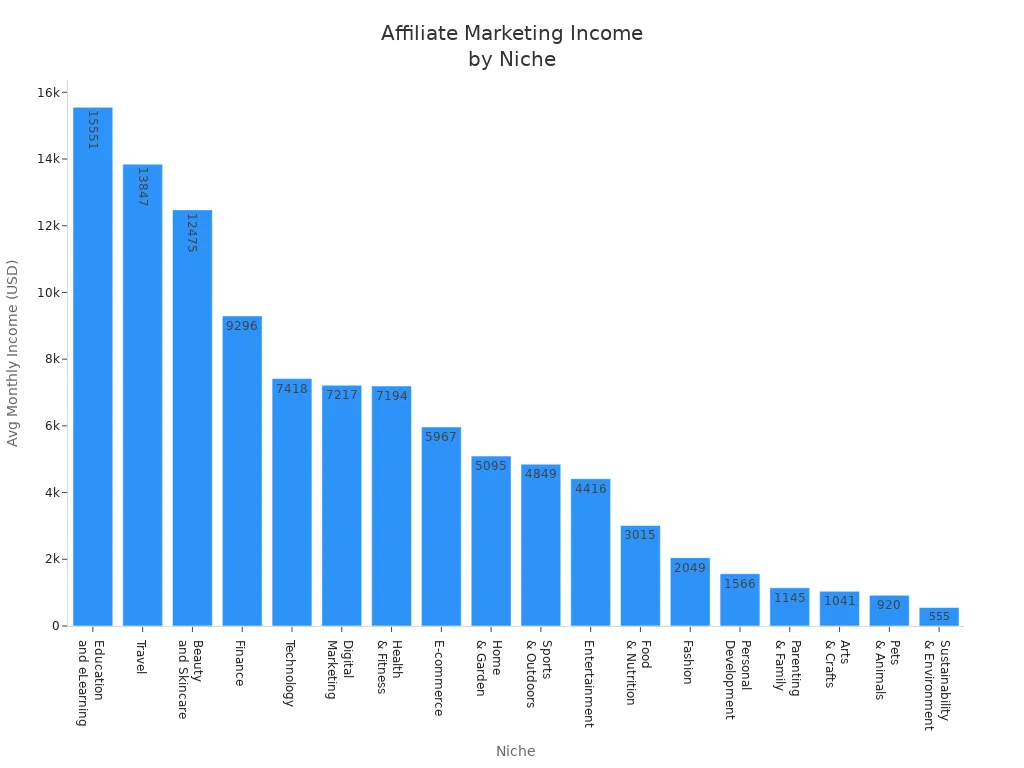
Several factors influence how much money writers can earn a commission from their blog or website. These include commission rates, niche selection, audience engagement, and promotional strategies.
Best Affiliate Programs for Authors
Choosing the right affiliate programs helps writers earn a commission and build passive income. Here’s a quick comparison:
| Affiliate Program | Payout Method | Support Description |
|---|---|---|
| Amazon Associates | Not specified | High-converting banners and easy to use. |
| ShareASale | Varies by merchant | Good tracking and many merchants. |
| CJ Affiliate | Varies by advertiser | Strong tracking, but approval needed for each merchant. |
| Rakuten Advertising | Varies by merchant | Good tracking tools. |
| ClickBank | Not specified | High commissions, but some low-quality products. |
| Impact | Varies by merchant | Automated tracking and many payout options. |
Writers often choose Amazon Associates for its ease of use and wide product range. ShareASale and CJ Affiliate offer more options for niche products. ClickBank pays high commissions, but writers should check product quality before promoting.
Common Pitfalls and How to Avoid Them
Many writers make mistakes when starting with affiliate marketing. Here are some common pitfalls:
Focusing on selling instead of helping readers
Publishing low-quality content on the blog or website
Ignoring site speed and readability
Not understanding the products they promote
Skipping SEO basics
Choosing niches with low buying intent
Lacking patience for passive income to grow
To avoid these mistakes, writers should:
Build trust by promoting products they believe in
Create high-quality content that solves reader problems
Learn SEO to help their blog post rank higher
Track performance and adjust strategies
Choose products that fit their website and audience
Writers who focus on helping readers and building passive income see better results. Real-world examples show that patience and quality content lead to steady money and more chances to earn a commission.
Authors can start earning from their blog by following these steps:
Grow an audience with valuable blog content.
Partner with relevant businesses.
Add affiliate links and track performance.
Affiliate marketing turns a blog into a second income stream, even before publishing. Try new programs, update posts, and keep learning.
https://pinardpublishing.com/what-sets-successful-online-course-businesses-apart-in-2025/
FAQ
How long does it take for writers to see affiliate income?
Most writers see their first commissions in a few weeks or months. Results depend on traffic, content quality, and how often they promote affiliate links.
Can writers use affiliate links in email newsletters?
Yes! Writers can include affiliate links in newsletters. They should always add a clear disclosure and check the affiliate program’s rules before sending.
Do writers need a large audience to earn with affiliate marketing?
No, a small but engaged audience can bring steady income. Writers who focus on trust and helpful content often see better results than those with big but inactive followings.