
You can expect online sales and distribution to keep growing fast through 2030.
| Year | Online Channel Growth Rate | Notes |
|---|---|---|
| 2025 | 2% | Driven by digitisation trend |
| 2030 | N/A | N/A |
The express delivery market may reach $403.2 billion by 2030, fueled by ecommerce. The global B2B eCommerce market could jump from $32.1 trillion in 2025 to $62.2 trillion by 2030, with a 14.5% annual growth rate.
Strong market growth projections help you plan ahead. When you use sales forecasts, you can manage cash flow, budget wisely, and scale your business for Online Sales & Distribution Expansion.
Key Takeaways
Expect online sales to grow rapidly, reaching over $1.2 trillion by 2025. This growth offers opportunities for businesses to expand their reach.
Invest in technology to enhance customer experience. Use AI and data analytics to personalize shopping and streamline operations.
Focus on sustainability. Consumers prefer eco-friendly products and practices, so adopting green strategies can boost your brand’s appeal.
Stay informed about regional trends. Asia-Pacific and the United States lead in ecommerce growth, presenting unique opportunities for expansion.
Adapt to changing regulations. Compliance with data privacy laws builds trust and ensures smooth operations in the evolving ecommerce landscape.
https://amzn.to/44FPzZG
Market Growth Projections
Global Outlook
You see ecommerce changing the way people shop around the world. The global retail ecommerce market reached $5.72 billion in 2023. Experts expect it to grow to $15.29 billion by 2032. This means you can expect a compound annual growth rate of 11.53% from 2024 to 2032. In 2024, the global ecommerce market stands at $4.9 trillion, with a projected CAGR of 6.8% through 2030. These market growth projections show strong momentum for online sales and distribution.
Several factors drive this expansion:
Technological advancements make ecommerce platforms faster and easier to use.
Consumers want quick and reliable delivery services.
Emerging markets see rapid growth in ecommerce adoption.
Businesses improve customer experience with real-time tracking.
Global supply chain disruptions push companies to use digital distribution systems.
International trade grows, so retailers need multi-channel strategies.
Companies seek better coordination and visibility across sales channels.
Sustainable logistics practices encourage eco-friendly transportation.
You notice that macroeconomic variables also affect ecommerce. Changes in inflation, exchange rates, and consumer sentiment can shift retail sales and consumption. For example, when the U.S. dollar depreciates or inflation declines, imports increase. Consumer sentiment indicators help you understand how people feel about spending during uncertain times.
| Macroeconomic Variable | Effect on U.S. Imports | Effect on Chinese Imports |
|---|---|---|
| U.S. Dollar Depreciation | Increases imports | Stable or increases |
| Inflation Decline | Increases imports | Stable or increases |
| Chinese Yuan Appreciation | N/A | Stable or increases |
You can use these insights to plan your ecommerce strategy and respond to global trends.
Regional Leaders
Ecommerce growth varies by region. Asia Pacific leads the world with a valuation of $1.9 billion in 2024. This region benefits from a rapidly evolving digital landscape and widespread smartphone use. North America follows with $1.5 billion, driven by high internet penetration and advanced logistics. Europe stands at $1.2 billion, supported by strong regulations that make trade easier. South America and the Middle East & Africa show smaller numbers, but you see significant growth opportunities as internet infrastructure improves.
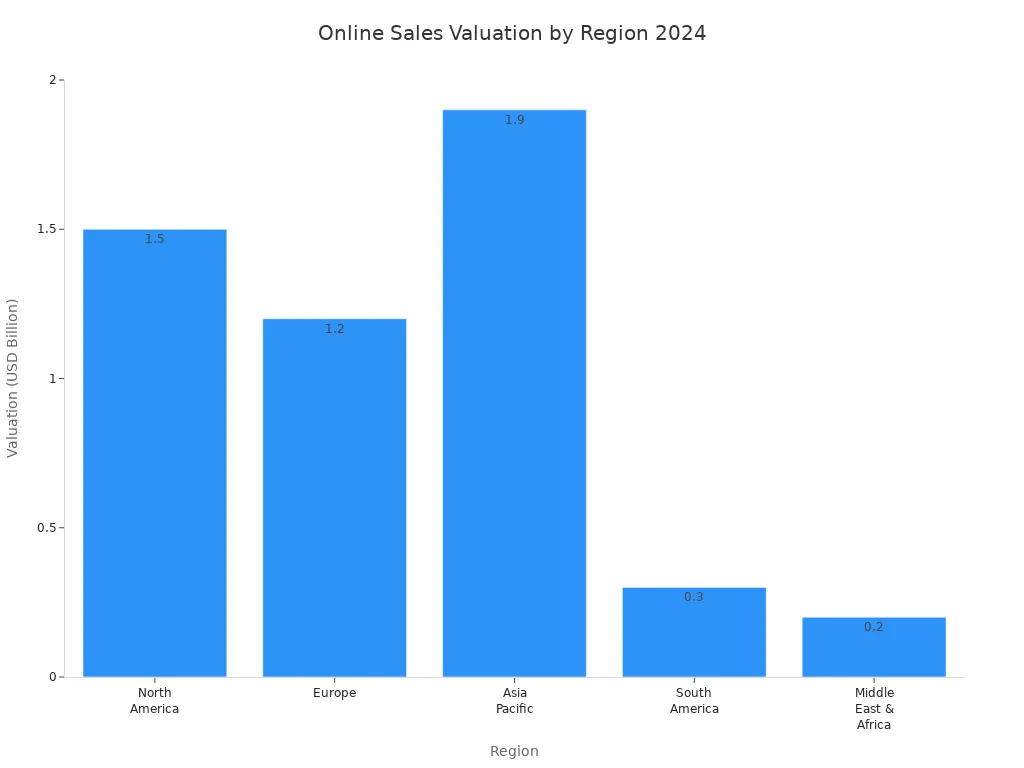
Here is a table that summarizes the regional ecommerce market valuations and growth insights:
| Region | Valuation in 2024 (USD Billion) | Growth Insights |
|---|---|---|
| North America | 1.5 | High internet penetration and advanced logistics |
| Europe | 1.2 | Strong regulatory framework facilitating trade |
| Asia Pacific | 1.9 | Rapidly evolving digital landscape and smartphone use |
| South America | 0.3 | Improving internet infrastructure and consumer adoption |
| Middle East & Africa | 0.2 | Significant growth opportunities due to internet improvements |
Asia-Pacific and the United States stand out for their projected growth rates. Asia-Pacific expects a CAGR of 19.8% from 2025 to 2034. The United States follows closely with a 19.33% CAGR. The U.S. ecommerce market will grow from $146.09 billion in 2024 to $851.46 billion by 2034. You can see that both regions offer strong opportunities for online sales and distribution.
| Region | Projected CAGR (2025-2034) | Market Value (2024) | Projected Value (2034) |
|---|---|---|---|
| Asia-Pacific | 19.8% | N/A | N/A |
| United States | 19.33% | $146.09 billion | $851.46 billion |
You should pay attention to these market growth projections when planning your ecommerce expansion. Asia-Pacific offers rapid digital adoption, while the United States provides a large and mature market. Both regions set the pace for global ecommerce development.
Online Sales & Distribution Expansion

Technology Drivers
You see technology shaping the future of online sales & distribution expansion. User-friendly ecommerce platforms and mobile apps make it easy for you to shop from anywhere. Companies use AI and data analytics to understand your preferences and personalize your experience. Machine learning algorithms suggest products you might like, which helps you find what you need faster. AI-powered chatbots answer your questions and guide you through purchases, making online sales smoother.
Augmented reality lets you view products in your space before you buy. This technology helps you make better decisions and reduces returns. Logistics and supply chain innovations also play a big role in ecommerce. Businesses use AI, IoT, and automation to improve delivery times and efficiency. Many companies invest in logistics software to meet your expectations for fast and reliable delivery. These advancements support the rapid growth of online sales & distribution expansion.
Tip: Try using AR features on ecommerce sites to see how products fit in your home before you buy.
https://amzn.to/3Y9JRLX
Consumer Trends
Your shopping habits drive online sales & distribution expansion. Many people now value safety, performance, and sustainability when choosing products. You may look for lightweight, durable, and eco-friendly items. Brands respond by adopting sustainable practices and offering more green products.
Convenience matters more than ever. Nearly 40% of urban shoppers use grocery delivery every week, and about 90% shop with online-only retailers. Social media helps you discover new products, but you trust family and friends most when making decisions. Around 32% of shoppers use social platforms for research, and this number is even higher in places like India.
Global reach also boosts online sales & distribution expansion. Cross-border ecommerce sales grew by over 20% in 2020. More than half of online shoppers made purchases from other countries. This trend shows that you have access to products from around the world, making ecommerce a truly global marketplace.
Ecommerce Sector Breakdown
B2C Trends
You see big changes in ecommerce for consumers. Health, wellness, and sustainable products now lead online sales growth. You want products that fit your lifestyle and values. Companies use innovations in logistics and AI-driven personalization to meet your needs. You enjoy shopping online because it is fast and easy. Brands focus on convenience and quality to keep you coming back.
Health products
Wellness products
Sustainable products
You notice that ecommerce platforms now offer better delivery and more choices. Many brands use data to suggest items you might like. This makes your shopping experience smoother and more personal.
B2B Ecommerce
You play a key role in the rapid growth of b2b ecommerce. Global businesses invest in digital transformation to improve how they buy and sell. You see organizations choosing flexible and robust digital commerce solutions. These tools help you manage procurement and sales operations more efficiently.
The b2b ecommerce platform market grows quickly as companies invest in digital tools.
You use flexible and robust digital commerce solutions to improve your work.
Composable and headless architectures let you customize and innovate.
You expect a seamless digital experience. Most procurement professionals are Millennials or Gen Z, and you want fast, easy online ordering. You prefer to place repeat orders online. Many buyers, like you, are willing to spend large amounts through self-service ecommerce. You also want an omnichannel experience, so you can research, interact, and buy across different channels.
Digital transformation of traditional industries
Globalization of supply chains
Rising demand for customization
COVID-19 pandemic and increased online adoption
Cost efficiency and operational improvement
You see b2b ecommerce platforms help you reach global markets and streamline your operations. These platforms give you real-time data and automation, which save you time and money.
Mobile & Social Commerce
You use your phone for most of your ecommerce activities. Mobile commerce is set to reach $3.35 trillion worldwide by 2028. Social commerce also grows fast, especially in China and the US.
| Sector | Region | Forecasted Growth Rate (CAGR) | Projected Value |
|---|---|---|---|
| Social Commerce | China | 11% – 36% | $537BN by 2025 |
| Social Commerce | US | 30%+ | $144BN by 2027 |
| Social Commerce | Asia-Pacific | ~34% | N/A |
| Mobile Commerce | Worldwide | N/A | $3.35 trillion by 2028 |
You trust online reviews and social media when you shop. Most businesses see more leads and traffic from social platforms. You rely on these channels to discover new products and make buying decisions.
| Statistic | Description |
|---|---|
| 78% | Businesses with a social media presence increase leads significantly. |
| 81% | Social media users trust online business reviews as much as personal advice. |
| 84% | Business owners say social media boosts service traffic. |
Digital Transformation Trends
Digital transformation shapes the future of ecommerce. You see new innovation every year, changing how you shop and interact with brands. The most important trends include ai, hyper-personalization, augmented reality, and sustainability. These trends help you enjoy a seamless and engaging shopping experience.
| Trend | Description |
|---|---|
| AI-Driven Business Intelligence | Revolutionizes decision-making processes by utilizing predictive analytics and machine learning to understand consumer behavior and optimize recommendations. |
| Hyperautomation | Combines ai and robotic process automation to automate complex business processes, improving efficiency and reducing human errors. |
| Edge Computing | Decentralizes data processing to reduce latency and increase efficiency, enabling real-time data analysis for applications like autonomous vehicles. |
| Quantum Computing | Solves complex computational problems, impacting areas such as cybersecurity and logistics, and accelerating drug discovery processes. |
| Personalized Digital Customer Experiences | Enhances customer interactions through ai-powered tools that personalize shopping experiences based on past behavior. |
| Sustainable Digitalization | Integrates eco-friendly technologies into digital strategies, focusing on energy efficiency and reducing environmental footprints. |
AI & Personalization
You notice ai everywhere in ecommerce. It powers product recommendations, dynamic website content, and personalized messages. When you browse online, ai studies your behavior, purchase history, and interests. It guides you with helpful next steps and reminds you about items left in your cart. Hyper-personalization takes this further by creating unique experiences for each shopper. You receive tailored emails and push notifications that match your habits.
Smart recommendations show you products you want.
Dynamic content changes based on your profile.
Automatic audience groups help brands target you better.
Ai-driven personalization increases conversion rates by up to 15%. You see higher order values and fewer abandoned carts. Hyper-personalization makes your shopping journey smooth and enjoyable. Brands like Amazon and Nike use ai to deliver these experiences, keeping you engaged and satisfied.
AR in Ecommerce
Augmented reality brings products to life. You can try on clothes virtually or see how furniture fits in your room. Ai-powered ar tools make these experiences interactive and fun. Retailers using ar see a 40% boost in engagement and a 25% increase in conversion rates. You feel more confident when you can visualize products before buying.
| Statistic | Description |
|---|---|
| 72% | Luxury fashion shoppers in the UK excited to use AR for digital shopping. |
| 90% | Gen Zers willing to use AR for visualizing furniture in their homes. |
| 94% | Higher conversion rates from 3D AR ads compared to static ads. |
| 78% | Consumers preferring AI-enhanced AR experiences for real-time interaction. |
| 40% | Increase in engagement for retailers using AI-powered AR. |
| 25% | Boost in conversion rates for retailers using AI-powered AR. |
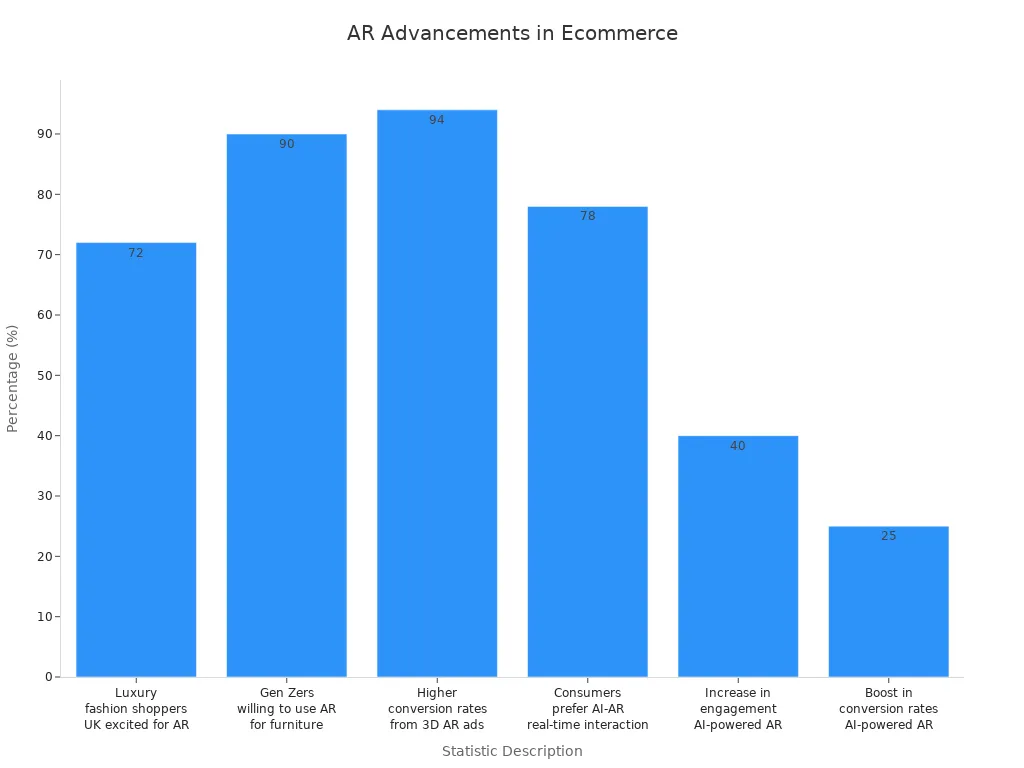
You benefit from fewer product returns and better decision-making. Ai-based 3D configurators let you customize products in real time. This level of innovation keeps you interested and helps brands stand out in ecommerce.
Omnichannel & Sustainability
Omnichannel strategies connect your online and offline experiences. You might buy online and pick up in-store, or check your purchase history with a sales associate. Ai-driven recommendations raise your average basket size by 20%. Retailers using a single customer profile improve efficiency by 5%. You enjoy a seamless journey across all channels.
“It’s no longer e-commerce vs. in-store. That battle is over. What truly matters today is how digital shapes every step of the buying journey. Because in 2025 and beyond, everything is digital. Success demands a powerful omnichannel strategy and a close eye on how ai is redefining that strategy.” – Adrian Gmelch
Sustainability also matters to you. Over 75% of consumers prefer sustainable products online. You want brands to use eco-friendly packaging and energy-efficient delivery. Digital transformation supports these goals by integrating green technologies and transparent practices.
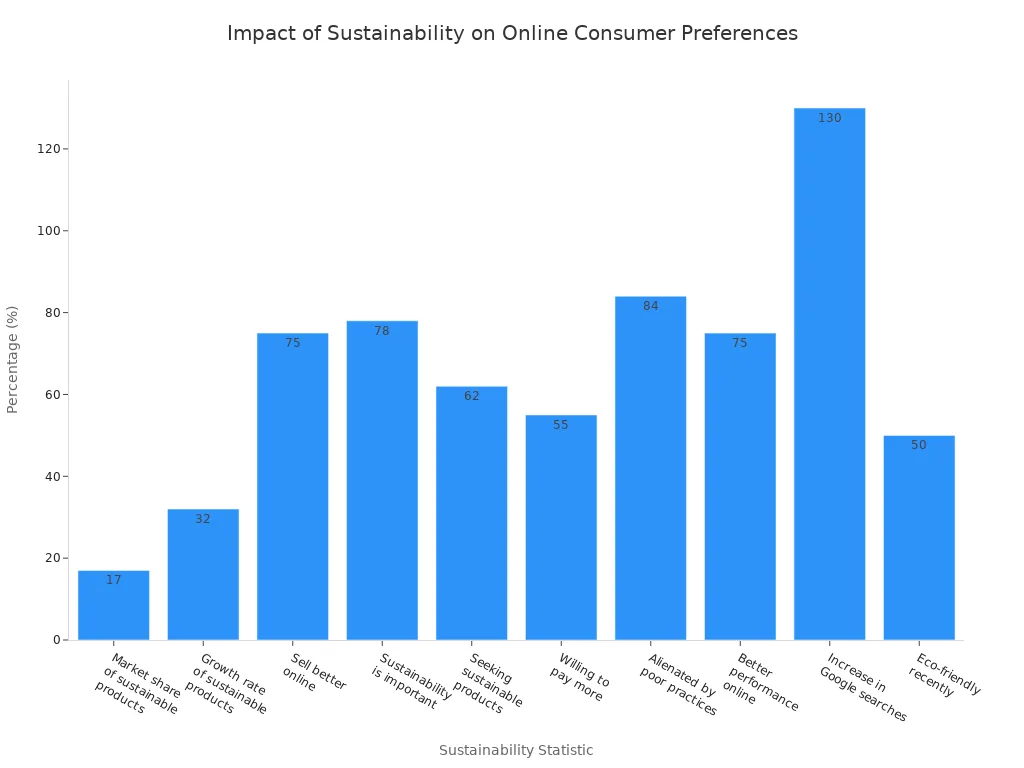
You drive change in ecommerce by demanding innovation, hyper-personalization, and sustainability. Digital transformation ensures that your needs come first, making shopping smarter and greener.
Actionable Strategies
https://amzn.to/4aAXueJ
Tech Investment
You drive commerce growth by making smart technology investments. Start by looking at your current systems and finding gaps. Many leading companies use this approach to stay ahead in global ecommerce. You can follow these steps to guide your investment decisions:
Assess your needs and identify pain points for both customers and staff.
Allocate your budget to the most important upgrades.
Choose vendors who offer scalable and cost-effective solutions.
Integrate new tools with your existing systems.
Monitor performance and optimize as you grow.
You see commerce leaders using AI to personalize customer interactions. Mobile-first shopping platforms help you meet buyer expectations. Advanced product search and discovery tools make it easier for you to find what you want. Project management and automation software streamline your operations and reduce errors. Financial management tools improve data accuracy and help you stay compliant with regulations. By 2025, IT spending in commerce will accelerate, with a focus on AI-powered personalization and cybersecurity. These investments support your growth projections and help you respond to changing trends in the market.
Customer Experience
You shape the future of commerce by demanding better customer experience. Companies use data and analytics to understand your needs and deliver seamless service. AI-driven chatbots answer your questions quickly. Real-time inventory systems ensure products are available when you want them. Fashion retailers use AR for virtual try-ons, while luxury brands invest in secure payment gateways. These tools help you shop with confidence and ease.
You expect brands to use data to personalize your journey. Analytics reveal trends in your behavior, so companies can adjust their strategies. Meeting buyer expectations means offering fast delivery, easy returns, and clear communication. When you feel valued, you return to shop again. This focus on customer experience drives commerce growth and supports positive market projections.
Regulatory Adaptation
You see commerce changing as new regulations emerge. Companies must adapt to data privacy laws and global ecommerce standards. Staying compliant protects your data and builds trust. Businesses use analytics to track compliance and spot risks early. Automation tools help manage complex rules across different markets.
You benefit when companies follow best practices for data security. Secure payment systems and transparent policies keep your information safe. As commerce expands, adapting to regulations ensures smooth operations and supports long-term growth. Brands that prioritize compliance inspire trust, reinforcing the market as a whole and aligning with future growth projections.
You see online sales growing fast, with global sales reaching nearly $1.1 trillion in 2024 and over $1.2 trillion in 2025.
| Year | Global Online Sales Growth | Total Sales Value |
|---|---|---|
| 2024 | 7.5% | Nearly $1.1 trillion |
| 2025 | 7.7% | Over $1.2 trillion |
You can boost your success by modernizing legacy systems, adopting cloud solutions, and using AI for personalization.
Align technology with your business goals
Make data-driven decisions
Integrate advanced tools for scalable growth
Stay flexible and apply these strategies to lead in ecommerce through 2030.
FAQ
What drives the rapid growth of online retail e-commerce sales?
You see online retail e-commerce sales grow because of better technology, fast delivery, and more choices. Mobile commerce and social commerce also help you shop from anywhere. Personalized experiences make shopping easier and more fun.
How does livestream shopping impact ecommerce revenue?
Livestream shopping lets you watch product demos and ask questions in real time. You can buy products during the stream. This trend boosts ecommerce revenue by making online shopping more interactive and personal.
https://pinardpublishing.com/how-to-get-the-most-from-your-seo-bootcamp-course/
Why do brands focus on personalized experiences in online retail?
You want shopping to feel unique. Brands use data to create personalized experiences for you. This approach increases retail e-commerce sales and keeps you coming back to online stores.
What makes mobile commerce important for online shopping?
You use your phone for most online purchases. Mobile commerce gives you quick access to products and deals. It supports retail e-commerce sales by making shopping easy and fast.
How does livestream shopping change the online shopping experience?
Livestream shopping lets you see products in action. You can ask questions and get answers right away. This online trend creates trust and excitement, helping retail e-commerce sales grow.
See Also
7 Strategies to Begin Your Functional Fitness Adventure